Conclusion: Closing Note
The AI-native team operating model is not a smaller old team with better tools; it is a system redesigned around judgment scarcity.

Research spine
This chapter is grounded in Brynjolfsson, Li, and Raymond, Generative AI at Work, Peng et al., The Impact of AI on Developer Productivity, and DORA, State of AI-assisted Software Development 2025.
Key Takeaways
- The book argues for redesigning teams around judgment scarcity, not just increasing tool usage.
- The durable assets are standards, role boundaries, evals, cadences, and accountability maps.
- The practical test is whether a workflow can move without undocumented senior memory.
- The next volume applies the same operating logic to the AI-native SDLC.
The AI-native team operating model is not a smaller old team with better tools. It is a system redesigned around judgment scarcity. Work generation gets cheaper; judgment, accountability, context, and trust become more valuable. The companies that understand that shift will build teams with fewer theatrical handoffs and better decision artifacts. The companies that do not will drown in machine-produced output and call it transformation.
The practical test is whether a new workflow can move without borrowing undocumented senior judgment. If the answer lives only in one person's head, the team has not scaled. The standard needs to be visible, the evidence needs to be replayable, and the rollback path needs an owner.
That is the thread running through the book: output acceleration is easy to see, but responsibility design is what makes the acceleration usable.
The next book in the canon, The AI-Native SDLC, applies the same argument to software development itself: version control, review, testing, release, incident response, and delivery when the machine writes a meaningful share of the code.
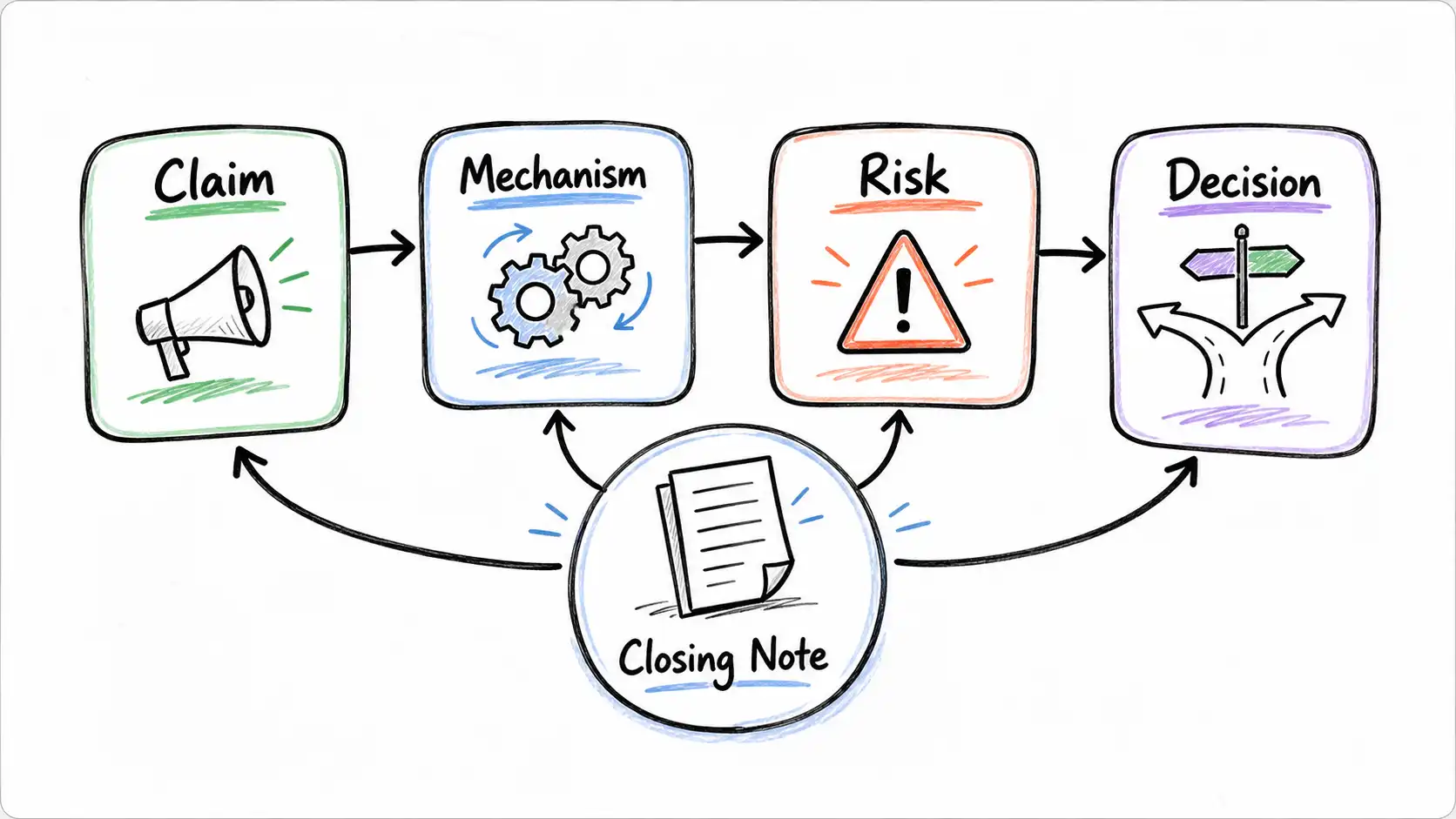
Internal map
For the larger argument, keep this chapter connected to the AI-Native thesis, Building an AI-Native Team, The Judgment Economy, and Human in the Loop Is Not a Plan.