The REV-AI Framework
The pricing meeting had too many opinions. Product wanted usage pricing.

Key Takeaways
- The REV-AI Framework is a chapter about AI revenue engineering, not a generic AI adoption note.
- The operating rule is to sell proved work, measured risk, and margin discipline rather than demo theater.
- The failure mode to watch is polished output without evidence, owner, cost line, or rollback path.
- The useful next step is an artifact a future teammate can replay without folklore.
AI revenue work converts when the seller can prove resolved work, cost, risk, and expansion evidence, not just a polished demo.
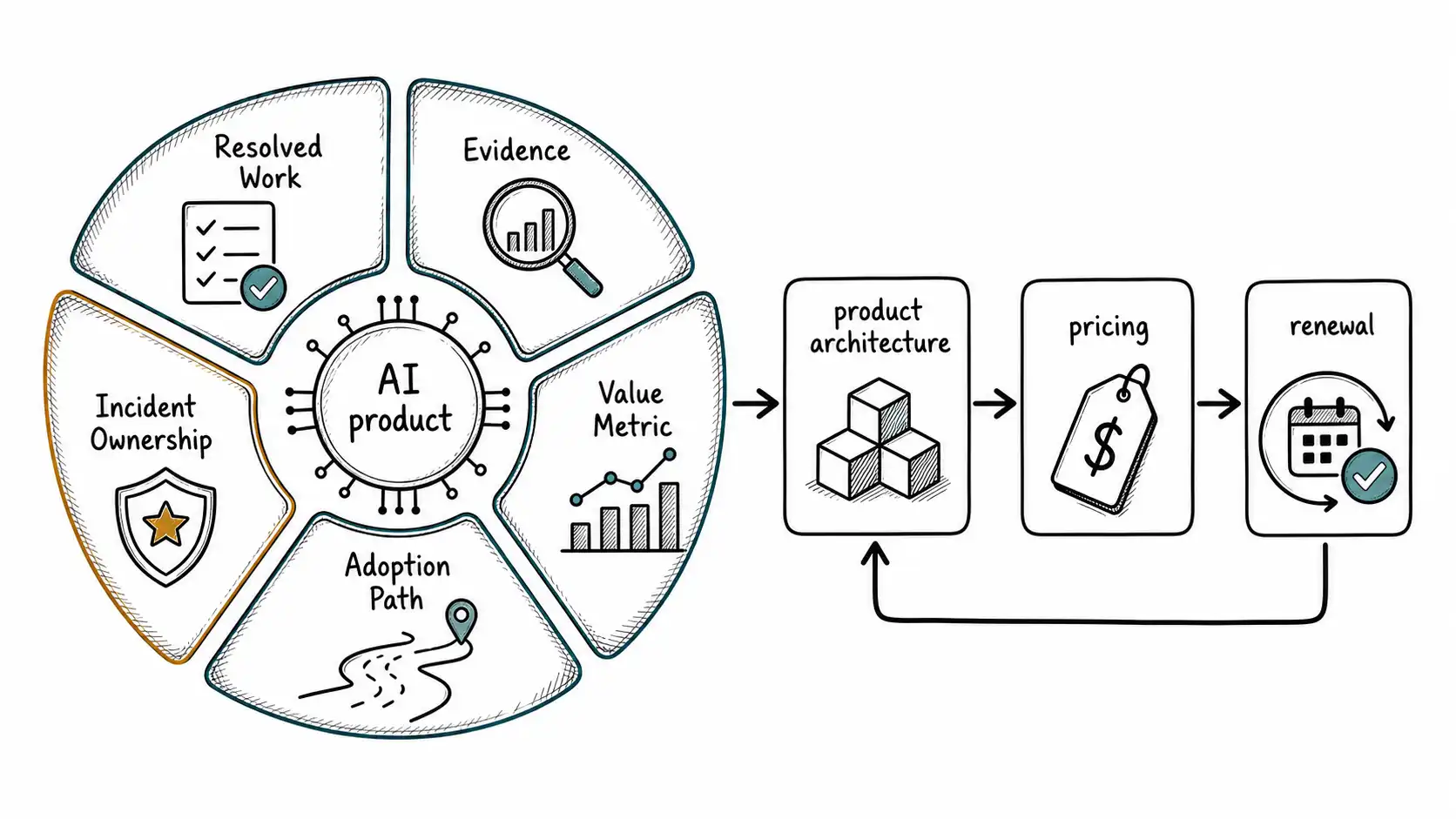
The pricing meeting had too many opinions. Product wanted usage pricing. Sales wanted seats because customers understood them. Finance wanted committed minimums. Engineering wanted token pass-through. Customer success wanted to avoid surprise bills. The discussion finally improved when the CRO put five words on the whiteboard: Resolved work, Evidence, Value metric, Adoption, Incident ownership.
The pricing model was not the starting point. REV-AI was.
REV-AI is a commercial design framework for AI-native products. It prevents teams from jumping directly from feature capability to pricing page. Each element must be answered before a company can sell durable AI value: what work is resolved, how value is evidenced, what metric carries pricing, how adoption expands, and who owns incidents when the system fails.
Research spine
This chapter uses: OpenView, Usage-Based Pricing; Zuora, What is Quote-to-Cash?; NIST AI Risk Management Framework; Bessemer Venture Partners, State of AI 2025.
R - Resolved work
Resolved work is the job the product completes, not the feature it exposes. "AI assistant" is not resolved work. "Classifies inbound support cases and drafts the first response with sources" is closer. "Resolves password-reset tickets without human intervention inside policy" is better. The more precise the work, the easier it is to price, evaluate, and sell.
E - Evidence of value
Evidence must be planned before the pilot. It may include baseline time, resolution rate, quality score, cost avoided, revenue generated, error reduced, cycle time shortened, or risk mitigated. The evidence should be credible to the economic buyer and traceable to the product's contribution.
V - Value metric
The value metric is the commercial unit that connects usage to buyer value. It might be resolved cases, processed documents, qualified accounts, generated reports accepted, invoices reconciled, or engineering tasks completed. A good value metric is understandable, auditable, hard to game, and correlated with value.
A and I - Adoption path and incident ownership
Adoption path names how the customer expands safely: from one workflow, to one team, to multiple teams, to platform. Incident ownership names who handles wrong answers, missed actions, cost spikes, compliance exceptions, and customer escalations. AI-native revenue requires both because customers buy expansion only when they trust recovery.
Operating table
| REV-AI element | Commercial question | Artifact |
|---|---|---|
| Resolved work | What job is completed? | Use-case definition |
| Evidence | How will the customer believe value happened? | Pilot scorecard |
| Value metric | What unit connects value and price? | Pricing meter |
| Adoption path | How does usage expand safely? | Rollout plan |
| Incident ownership | Who owns failure? | Support/risk playbook |
Artifact example: a REV-AI worksheet
rev_ai:
 product: "AI customer support resolver"
 resolved_work: "resolve eligible tier-1 support cases without human agent handoff"
 evidence:
 baseline: "current tier-1 cases resolved per agent-hour"
 pilot_metric: "resolution without reopening within 7 days"
 quality_sample: "weekly human review of 100 cases"
 value_metric: "verified_resolved_case"
 adoption_path:
 phase_1: "password reset and billing address changes"
 phase_2: "subscription changes with confirmation"
 phase_3: "refund exception recommendations"
 incident_ownership:
 owner: "customer operations"
 vendor_response_slo: "1 business day for severity-2 automation errors"
Checklist
- Do not choose pricing before defining resolved work.
- Design pilot evidence around the economic buyer.
- Pick a value metric customers can audit.
- Map expansion steps to trust earned.
- Make incident ownership part of the deal narrative.
Takeaway
REV-AI turns AI-native monetization into an operating design problem, not a pricing-page exercise.