Conclusion: Closing Note
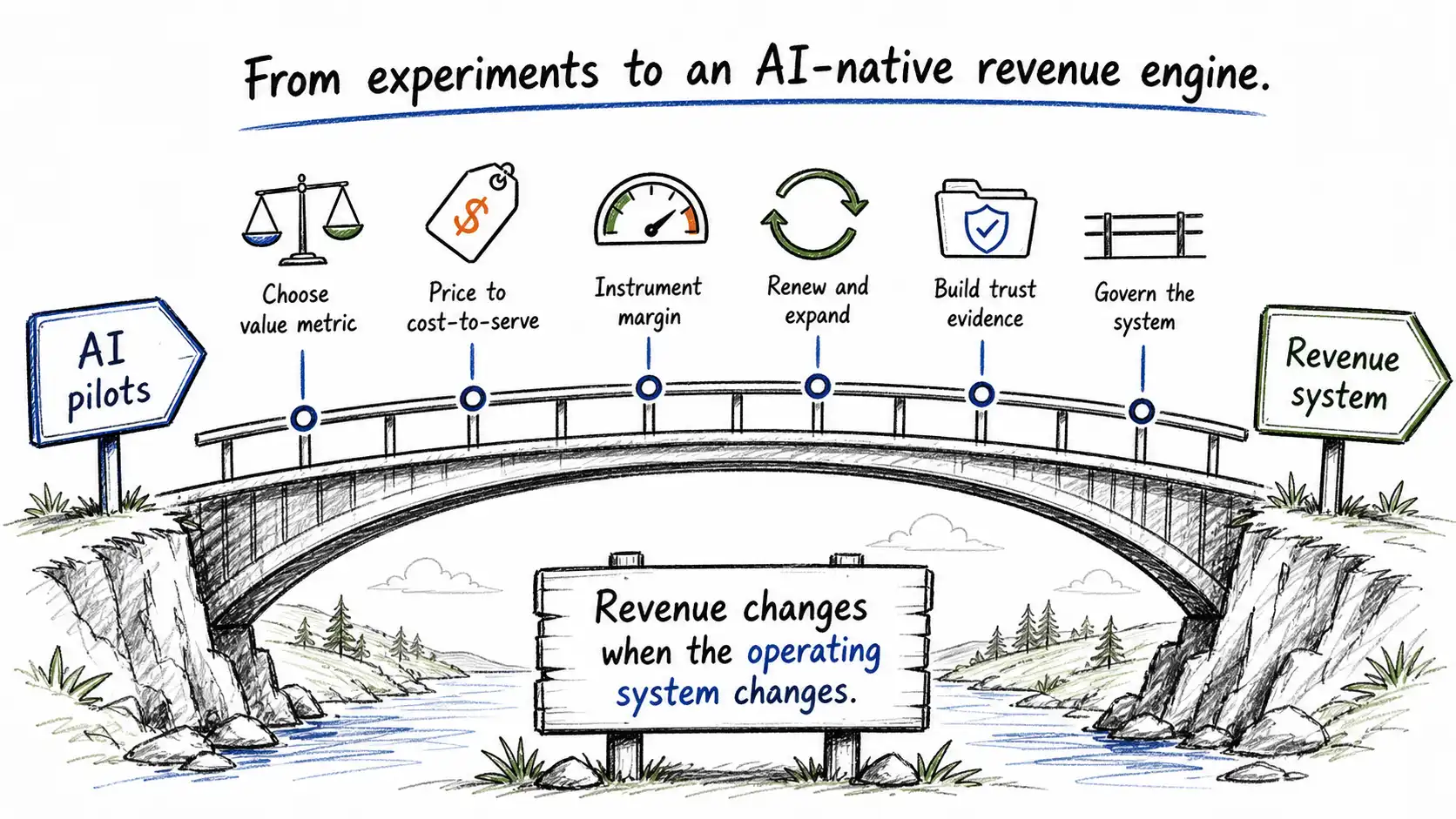
AI-native revenue is not a clever pricing page. It is the alignment of work performed, proof created, cost incurred, risk accepted, and value captured.

Research spine
This chapter is grounded in Brynjolfsson, Li, and Raymond, Generative AI at Work, NIST AI Risk Management Framework, and OpenAI API pricing.
Key Takeaways
- Conclusion: Closing Note is a chapter about AI revenue engineering, not a generic AI adoption note.
- The operating rule is to sell proved work, measured risk, and margin discipline rather than demo theater.
- The failure mode to watch is polished output without evidence, owner, cost line, or rollback path.
- The useful next step is an artifact a future teammate can replay without folklore.
AI-native revenue is not a clever pricing page. It is the alignment of work performed, proof created, cost incurred, risk accepted, and value captured. The company that cannot measure the work its software performs will struggle to price it. The company that cannot explain its risk will struggle to sell it. The company that cannot control inference cost will struggle to keep the margin it wins.
The final book in the canon, Systems That Ship, moves from revenue architecture to organizational execution: the habits that separate durable AI products from impressive demos.
Internal map
For the larger argument, keep this chapter connected to Revenue, Re-Engineered, Pricing Software That Thinks, selling AI to burned buyers, and the judgment economy.