Conclusion: Closing Note
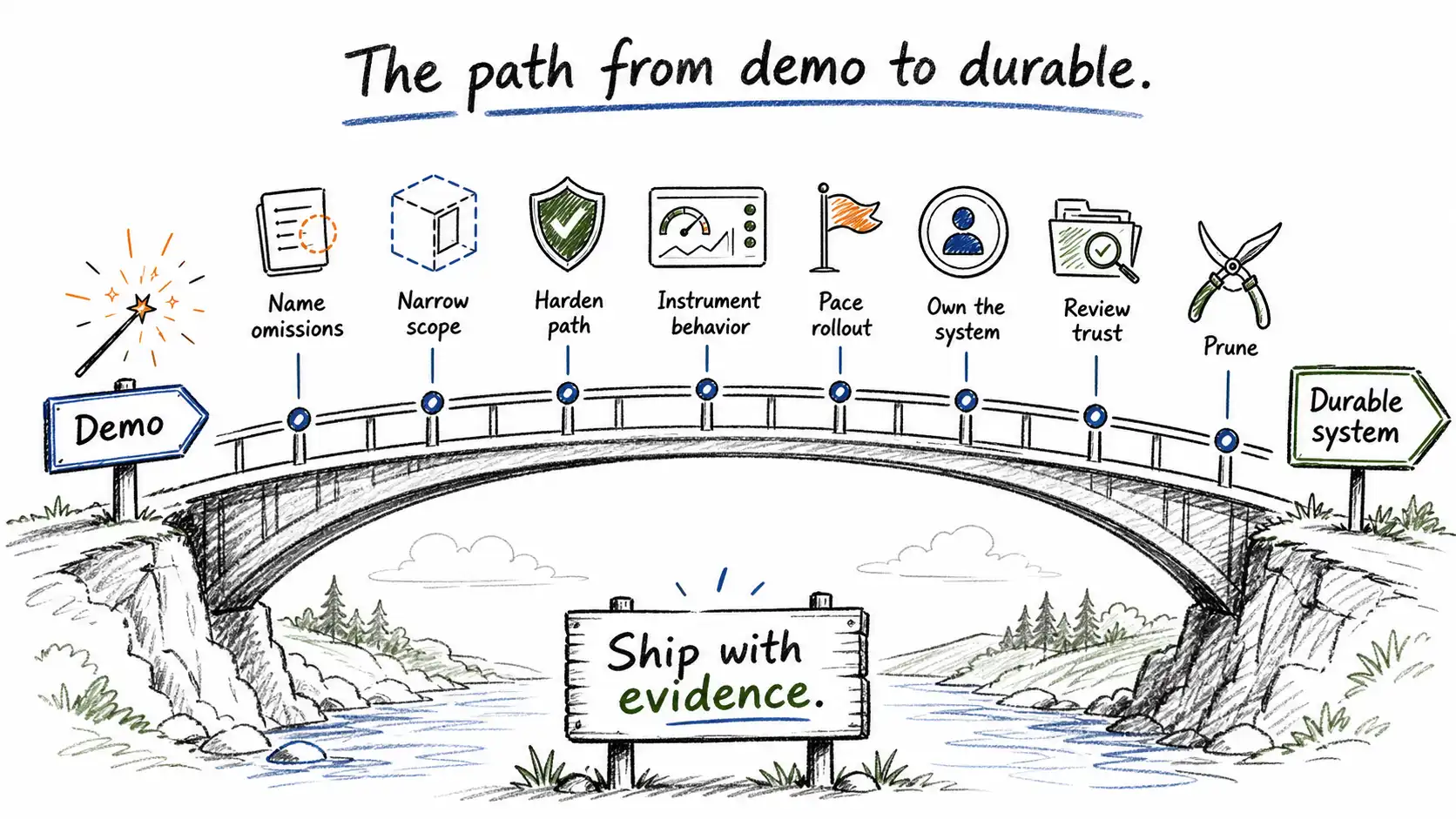
The AI-native organization is not the organization with the most demos. It is the organization that can turn a promising behavior into a governed, measured, cost-aware, trusted, and owned product surface.

Research spine: this chapter stays grounded in DORA, State of AI-assisted Software Development 2025 and Google SRE Book, then applies that evidence to the operating judgment in the book. The AI-native organization is not the organization with the most demos. It is the organization that can turn a promising behavior into a governed, measured, cost-aware, trusted, and owned product surface. Durable shipping is a habit. The habit is visible in artifacts, cadences, decisions, and recoveries.
The canon ends where production begins: with systems that ship, learn, and keep earning trust after the demo is forgotten.
Operational note
This short chapter is a map, not a full argument. Its job is to keep Conclusion: Closing Note usable inside Shipping Culture: define the terms, point to the sources, and make the next decision easier to replay.
Use it as a checkpoint before you treat the surrounding chapters as advice. A reader should be able to name the claim, the evidence, the risk boundary, and the follow-up page without interviewing the original author. If that replay fails, the chapter has not done its job yet.