Conclusion: Closing Note
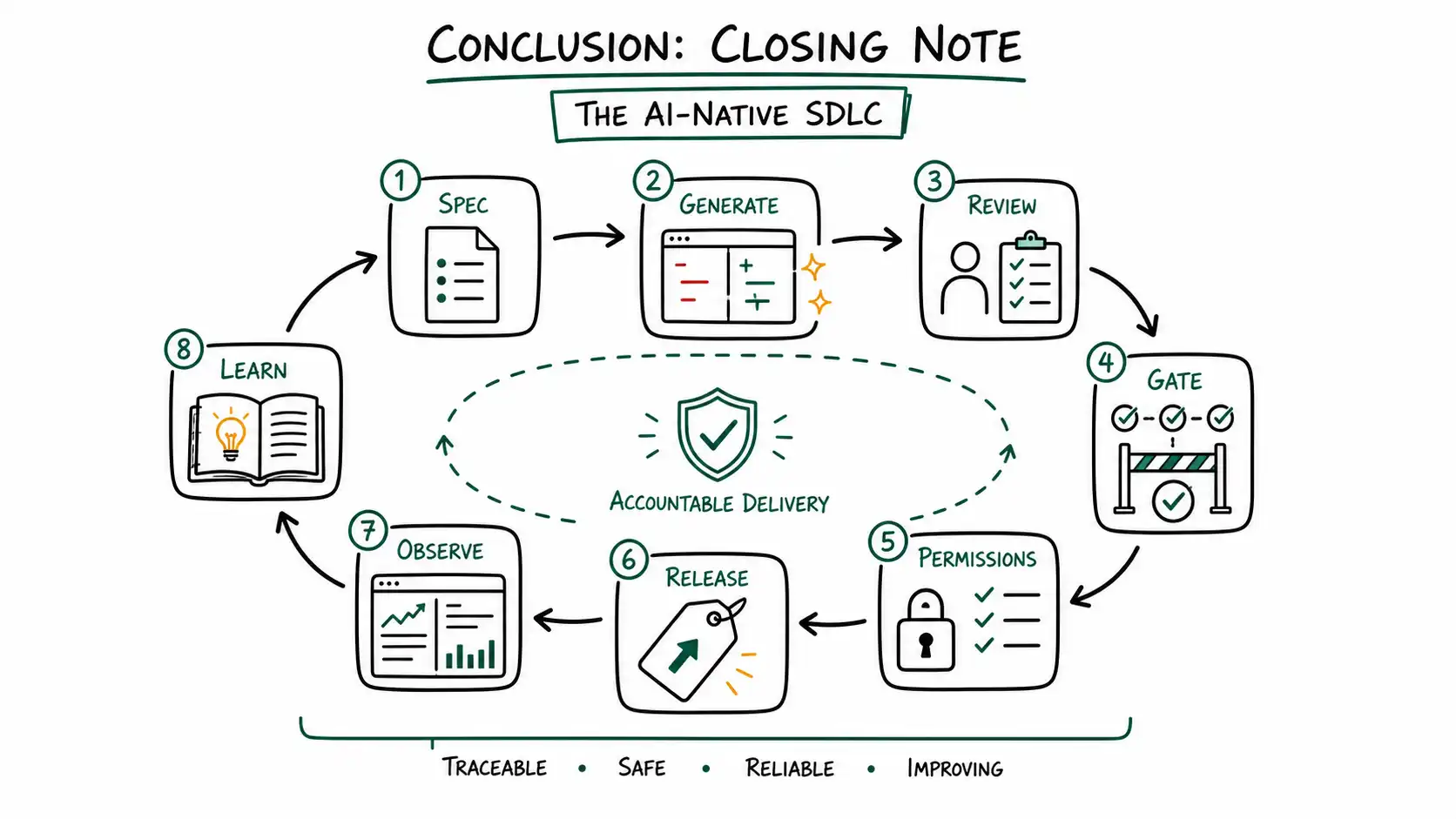
The AI-native SDLC does not worship generated code. It treats code as one artifact inside a larger chain of intent, provenance, evidence, ownership, and production learning.

The AI-native SDLC ends with a simple rule: generated code is useful only when the surrounding evidence chain can explain, own, observe, reverse, and improve it.
The AI-native SDLC does not worship generated code. It treats code as one artifact inside a larger chain of intent, provenance, evidence, ownership, and production learning. The teams that win will not be the ones that generate the most. They will be the ones that can safely absorb generation into a disciplined lifecycle.
The next book, Revenue, Re-Engineered, moves from engineering delivery to the business model: what a revenue leader sees when software stops merely granting access and starts doing measurable work.
Key Takeaways
- The winning team will not be the one that generates the most code; it will be the one that safely absorbs generation into the lifecycle.
- Intent, provenance, evidence, ownership, and production learning are the durable artifacts after code gets cheap.
- The book closes at production because that is where generated assumptions finally meet reality.
- The next commercial question is how machine-performed work changes revenue, cost, and trust.
Research spine
This chapter uses: DORA, State of AI-assisted Software Development 2025; Google Site Reliability Engineering Book; NIST SP 800-218 Secure Software Development Framework.