Conclusion: Design the Loop or Remove the Claim
The phrase "human in the loop" should make a product leader nervous until the loop is specified. A vague human loop creates false reassurance. A designed loop creates operational control.

Key Takeaways
- Conclusion: Design the Loop or Remove the Claim names the operating decision a team has to make before it accepts the work.
- The practical test is whether a team can name the evidence, owner, and failure mode before it changes behavior.
- Read this with Human in the Loop Is Not a Plan and the adjacent chapters when you need the wider Evals and Evaluation frame.
Research spine: this chapter stays grounded in NIST AI Risk Management Framework and NIST Secure Software Development Framework, then applies that evidence to the operating judgment in the book. The phrase "human in the loop" should make a product leader nervous until the loop is specified. A vague human loop creates false reassurance. A designed loop creates operational control.
The books in the AI-Native Canon argue that the machine increasingly takes the work and leaves humans the judgment. This book adds a constraint: judgment does not scale automatically. It requires interfaces, rubrics, capacity models, sampling plans, calibration, escalation, and evaluation systems that absorb what humans learn.
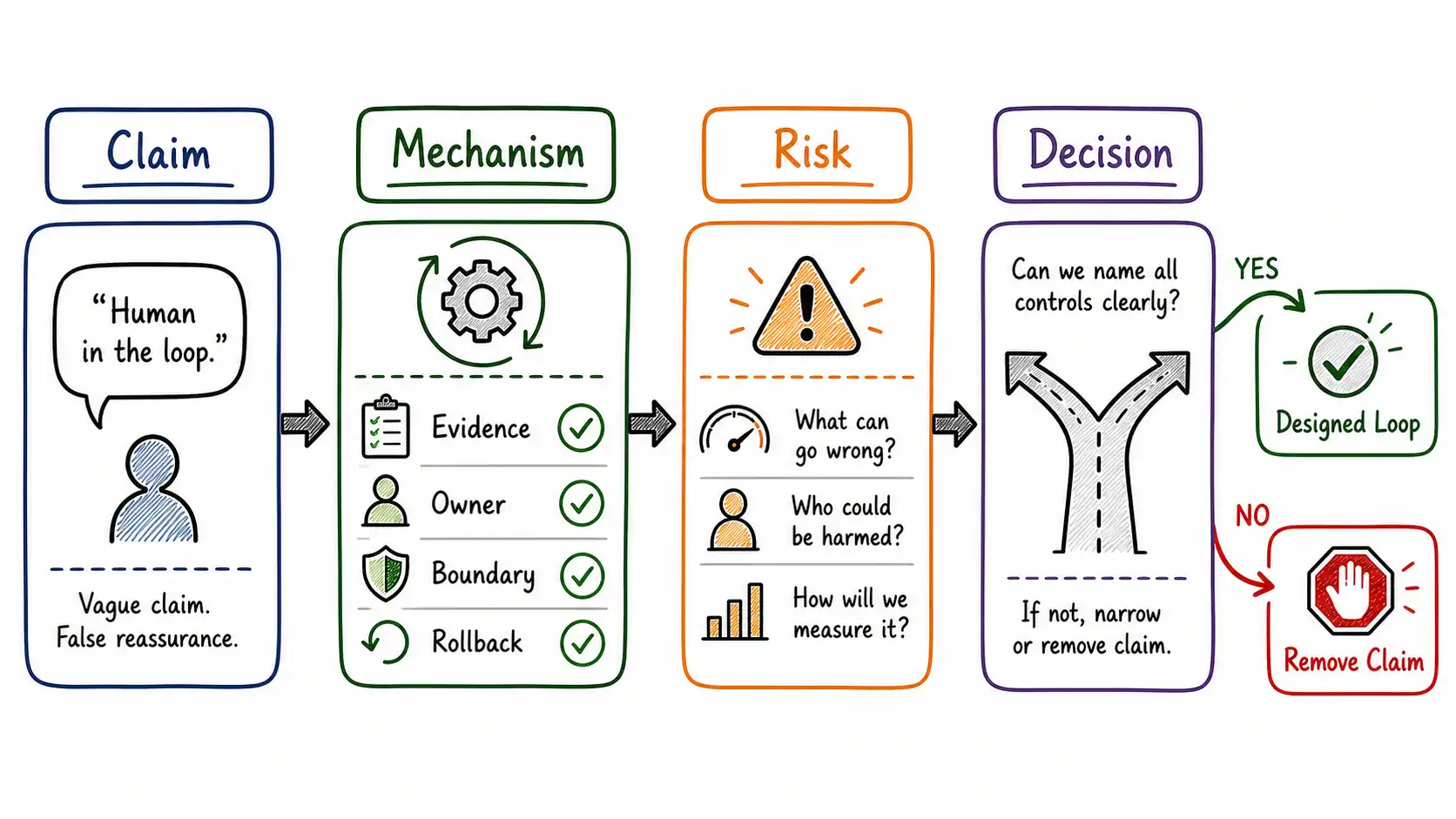
The best AI-native organizations will not review everything. They will know what not to review. They will know what must never be automated. They will know which sampled failures become eval cases. They will know when autonomy should be reduced. They will know when human attention is being wasted on work the system should have learned from already.
Human-in-the-loop is not a plan. Designed oversight is.